Footwear
The Case for the Chelsea Boot
No single piece of footwear has demonstrated the same breadth of application across six decades of menswear. A defence of the most versatile boot ever made.
By Michael Mammela··7 min read
Search for style guides, grooming tips, and wardrobe advice.
Footwear
A seasoned case for choosing, protecting, and rescuing fine footwear when the forecast turns hostile.
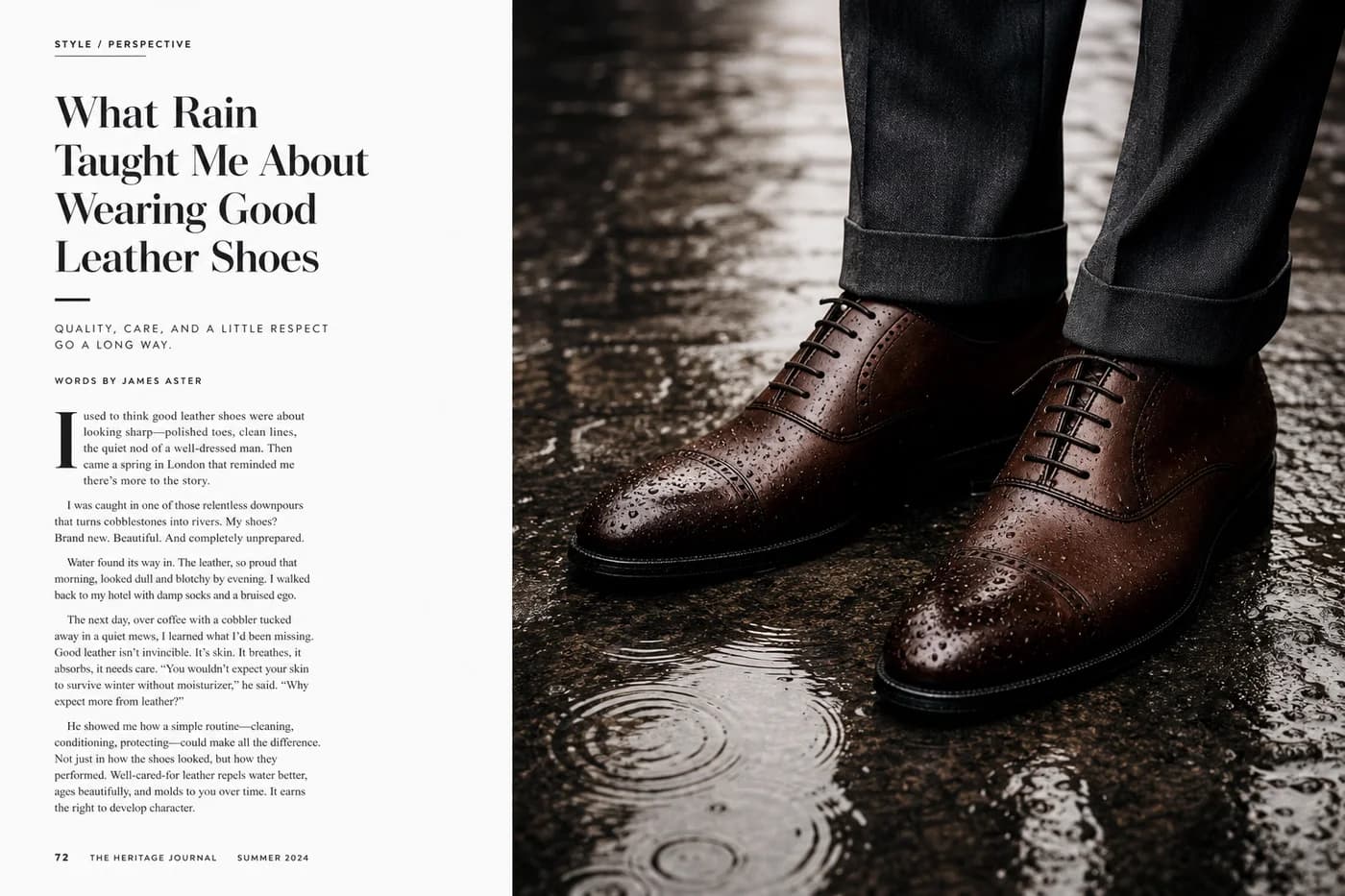
Polished brown leather dress shoes on rain-damp pavement, with water
The first time I truly ruined a pair of leather shoes, I was dressed well enough to know better. Navy overcoat, grey flannels, clean white shirt, and a pair of chestnut derbies that had no business stepping into a sideways rainstorm. By the time I got home, the leather had darkened in uneven patches, the soles felt swollen, and the elegant shape I had paid for looked faintly exhausted. Since then, I have learned that wet weather does not mean you have to abandon proper shoes. It just means you need to understand what leather can tolerate, what it cannot, and how to treat it before and after the damage is done.
Leather is tough, but it is not invincible. Good leather is a skin, and like skin, it reacts to moisture. Rain can strip out oils, leave water marks, soften structure, and encourage salt or grime to settle into the pores. The result is rarely dramatic in the moment. The trouble usually appears the next day, when the shoes dry stiff, blotchy, misshapen, or dull.
The most important thing to watch for is saturation. A little rain on polished leather is manageable. A long walk through puddles, wet grass, or slush is another matter entirely. Once water gets into the welt, sole, lining, and insole, you are no longer just dealing with surface care. You are managing the whole shoe.
The rule is simple: leather shoes can handle weather; they cannot handle neglect after weather.
In wet conditions, the sole tells you more than the upper. Leather soles are elegant, breathable, and beautifully traditional, but they are poor companions for heavy rain. They absorb water quickly and can wear down faster when soaked. If the forecast looks grim, I reach for rubber-soled derbies, boots, or anything with a Dainite-style sole. It is the difference between being appropriately dressed and being expensively stubborn.
Wet weather dressing starts before you step outside. I do not wear my most delicate calfskin oxfords when the sky looks hostile. Instead, I go for shoes with a bit more substance: grained leather, waxed suede, country brogues, or boots. Texture is your friend here. Grained leather tends to hide marks better than smooth polished calf, and a slightly heavier shoe looks more natural with coats, knitwear, denim, corduroy, and flannel.
Suede deserves a special mention. People panic about suede in rain, but properly treated suede can be surprisingly resilient. The key is protection beforehand and brushing afterward. That said, there is a difference between light drizzle and standing in a gutter hailing a cab. Know the difference.
The worst thing you can do after wearing leather shoes in wet weather is kick them off and forget about them. The second worst thing is put them near direct heat. Radiators, hair dryers, and fireplaces can dry leather too quickly, causing stiffness and cracking. Patience is the luxury move.
If you live somewhere with salted pavements, winter is more dangerous than rain. Salt can leave white rings and dry the leather aggressively. I deal with salt marks immediately, using a cloth dampened with clean water, sometimes with a touch of white vinegar diluted heavily. The point is not to soak the shoe again, but to lift the salt before it settles in and starts doing real damage.</
Topics
About the Author
Style Director
Michael is the co-founder of Sartorial and its Style Director. With over a decade spent studying classic menswear from the ateliers of London to the tailors of Naples, he writes about the enduring principles that underpin a truly refined wardrobe.
Continue Reading
Footwear
No single piece of footwear has demonstrated the same breadth of application across six decades of menswear. A defence of the most versatile boot ever made.