Style
The Anatomy of a Perfect Suit
From canvassing to cloth weight, a definitive guide to understanding what separates a suit that merely fits from one that transforms.
By Michael Mammela··9 min read
Search for style guides, grooming tips, and wardrobe advice.
Style
A refined guide to choosing hats that answer rain, wind, sun, and occasion with ease.
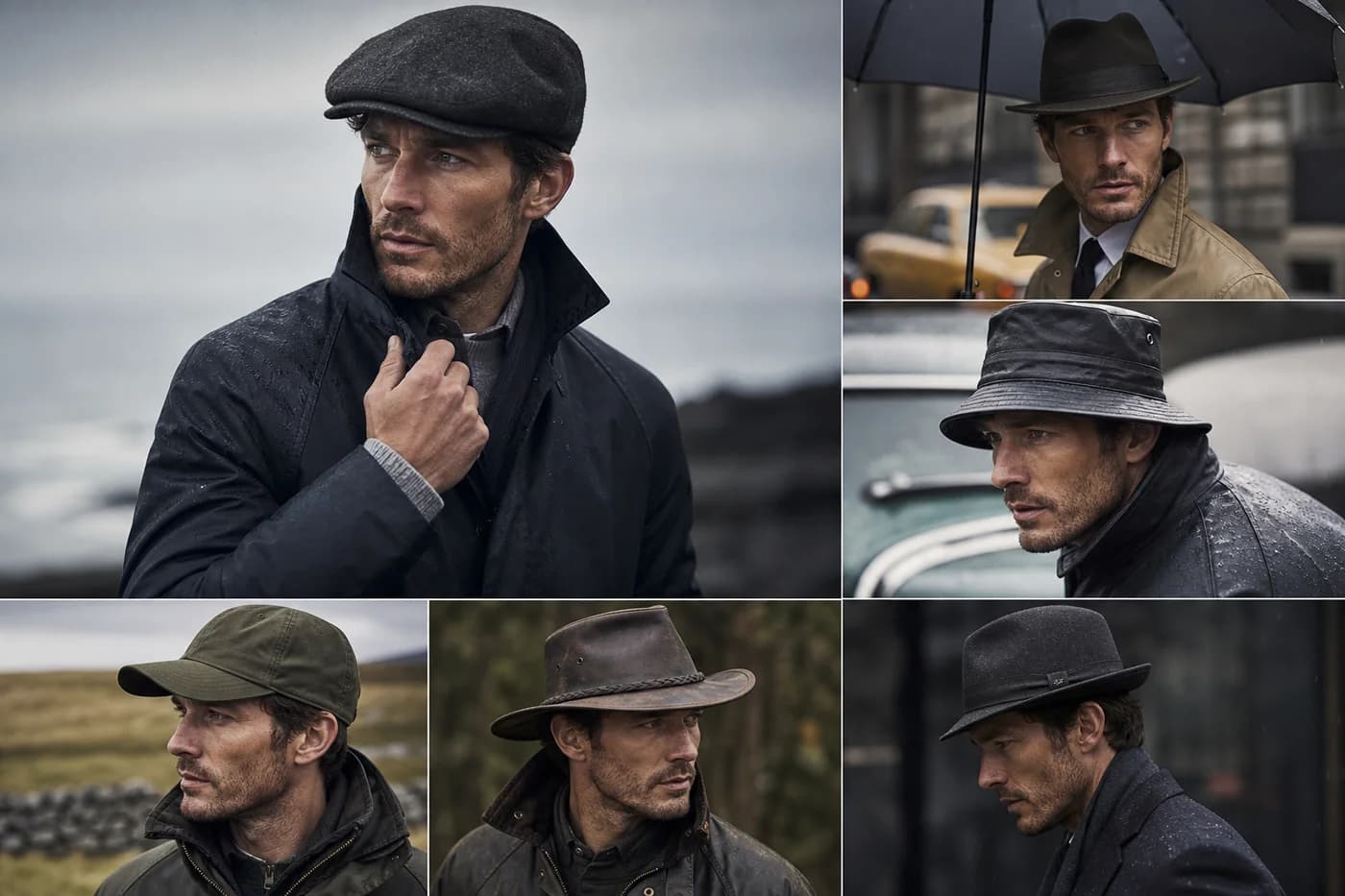
Assorted men’s weatherproof hats arranged neatly, including felt, waxed cotton, and rain-ready styles.
A good hat does more than finish an outfit. It declares that a man has considered the day ahead: the light, the wind, the possibility of rain, the formality of the room he is entering. In an era when many dress reactively—grabbing the nearest cap by the door—the well-chosen hat remains one of the last small acts of preparation. The trick is not owning dozens, but knowing which shapes, materials, and proportions can carry you through changing weather without looking either theatrical or careless.
The most elegant hat is the one that belongs to its conditions. A felt fedora on a humid July afternoon looks as misplaced as a linen cap in sleet. Class begins with appropriateness. Before thinking about color or brim width, assess the weather: temperature, precipitation, wind, sun exposure, and the level of formality required by the day.
There is also the matter of architecture. Hats are built to solve problems. A brim shields the eyes and collar. A crown traps warmth or allows ventilation. A weave breathes. A felt repels a light shower. A waxed cotton finish shrugs off weather. When selected intelligently, a hat is not costume; it is equipment with polish.
The best-dressed men do not wear hats to be noticed. They wear the right hat so the rest of the outfit makes sense.
For most men, a useful hat collection can be built around five categories: a felt hat for cool weather, a straw hat for heat, a flat cap for transitional days, a rain-ready hat for wet conditions, and a refined casual cap for off-duty moments. Within those categories, details matter: crown height, brim width, fabric weight, and the relationship between the hat and the wearer’s frame.
Felt fedora or trilby: Best for autumn and winter, especially with tailoring, wool coats, suede jackets, and knitwear.
Panama or straw hat: The warm-weather standard, ideal with linen, cotton suits, safari jackets, and resort tailoring.
Flat cap: A versatile bridge between casual and polished, particularly in wool, tweed, cotton, or linen blends.
Rain hat: Usually waxed cotton, treated wool, or technical fabric, chosen for function without sacrificing silhouette.
Minimal baseball cap: Acceptable when clean, unbranded or subtly branded, and worn with disciplined casual clothing.
When temperatures fall and the air turns crisp, felt becomes the gentleman’s ally. A wool felt fedora is accessible and practical; a fur felt version offers finer texture, better resilience, and a more luxurious hand. The classic fedora, with its pinched crown and medium brim, remains the most versatile choice. It sits naturally with a camel overcoat, navy peacoat, charcoal topcoat, or leather gloves.
Proportion is essential. Taller men can carry a higher crown and wider brim. Shorter men should avoid anything too broad, which can visually compress the frame. A brim of roughly two to two-and-a-half inches is a reliable middle ground. Charcoal, dark brown, navy, and taupe are more useful than black, which can read severe unless the rest of the outfit is equally formal.
There are days when romance must yield to insulation. A good watch cap—also called a beanie when one is being less precise—can be perfectly elegant if the material and fit are right. Choose merino wool, cashmere, or a sturdy ribbed lambswool. Avoid oversized slouch, novelty patterns, and synthetic shine. The ideal version sits close to the head, covers the ears when needed, and pairs cleanly with a wool coat, down parka, or shearling jacket.
Dark navy, heather grey, olive, and chocolate are the safest colors. A cashmere watch cap with a tailored overcoat offers a particularly modern form of cold-weather sophistication: practical, unforced, and quietly expensive.
Rain demands realism. Many fine hats can tolerate a light shower, but sustained downpour will punish delicate materials. A waxed cotton bucket hat, a traditional rain hat with a modest brim, or a treated felt fedora can perform well without making a man look as if he is dressed for a fishing expedition. The brim should be wide enough to move water away from the face and collar, but not so broad that it collapses or catches wind.
For city wear, the best rain hats are understated. Olive, dark brown, black, or navy waxed cotton works with trench coats, field jackets, macs, and technical outerwear. If wearing a suit, consider a water-resistant felt hat in charcoal or brown, but understand its limits: rain protection is a feature, not a dare.
A rain hat should look like part of the wardrobe, not an emergency measure purchased at the station.
In warm weather, breathability is dignity. The Panama hat, traditionally woven in Ecuador despite its name, is the benchmark. Its fine weave, pale color, and structured shape make it the rare summer hat that can accompany tailoring without collapsing into holiday cliché. Wear it with linen suits, cotton blazers, suede loafers, open-collar shirts, and lightweight knit polos.
Not all straw hats are equal. A cheap, stiff straw fedora can look more costume than classic. Seek a natural tone, a restrained band, and a shape that flatters the face. Wider brims offer better sun protection and look excellent with relaxed tailoring, but keep the silhouette controlled. For less formal summer dressing, a linen or cotton flat cap is a good alternative, especially when a full brim feels too declarative.
Wind is the enemy of elegance because it makes a man fuss. On blustery days, choose a hat with a lower profile and secure fit. Flat caps, driving caps, and close-fitting wool caps excel here. A fedora can work if properly sized, but an exposed bridge or riverside walk may turn it into a liability. A hat should never require constant supervision.
The flat cap is often underestimated because poor versions are common. Avoid bulbous shapes and flimsy fabrics. A sleek wool, Donegal tweed, herringbone, or cotton twill version can look sharp with a chore coat, quilted jacket, waxed field coat, or even a soft-shouldered blazer. It is particularly effective in spring and autumn, when weather shifts by the hour.
Weather may dictate the material, but dress code determines refinement. A hat that works with denim and boots may not work with tailoring. The key is harmony of formality. Rough cloth belongs with rougher hats; polished tailoring asks for cleaner lines.
Business tailoring: Choose a fine felt fedora in charcoal, taupe, or brown during cool months. In summer, a high-quality Panama can work if the environment is not aggressively conservative.
Smart casual: A flat cap, linen cap, refined baseball cap, or soft felt hat can all work, depending on the season and outerwear.
Weekend country wear: Tweed caps, waxed cotton hats, and wool felt hats feel natural with corduroy, flannel, denim, field coats, and robust boots.
Resort and travel: A Panama, rollable straw hat, or lightweight cotton cap offers protection without weight. Packability matters, but never at the expense of shape.
Evening wear: Hats are rarely necessary now, but if worn with formal outerwear, they must be immaculate. A dark felt homburg or fedora is the traditional route.
The baseball cap is not inherently unstylish; it is often simply worn lazily. For a premium wardrobe, the cap should be plain,
Topics
About the Author
Style Director
Michael is the co-founder of Sartorial and its Style Director. With over a decade spent studying classic menswear from the ateliers of London to the tailors of Naples, he writes about the enduring principles that underpin a truly refined wardrobe.
Continue Reading
Style
From canvassing to cloth weight, a definitive guide to understanding what separates a suit that merely fits from one that transforms.