Style
The Gentleman’s Weatherproof Hat Wardrobe
A refined guide to choosing hats that answer rain, wind, sun, and occasion with ease.
By Michael Mammela·
Search for style guides, grooming tips, and wardrobe advice.
Style
From canvassing to cloth weight, a definitive guide to understanding what separates a suit that merely fits from one that transforms.
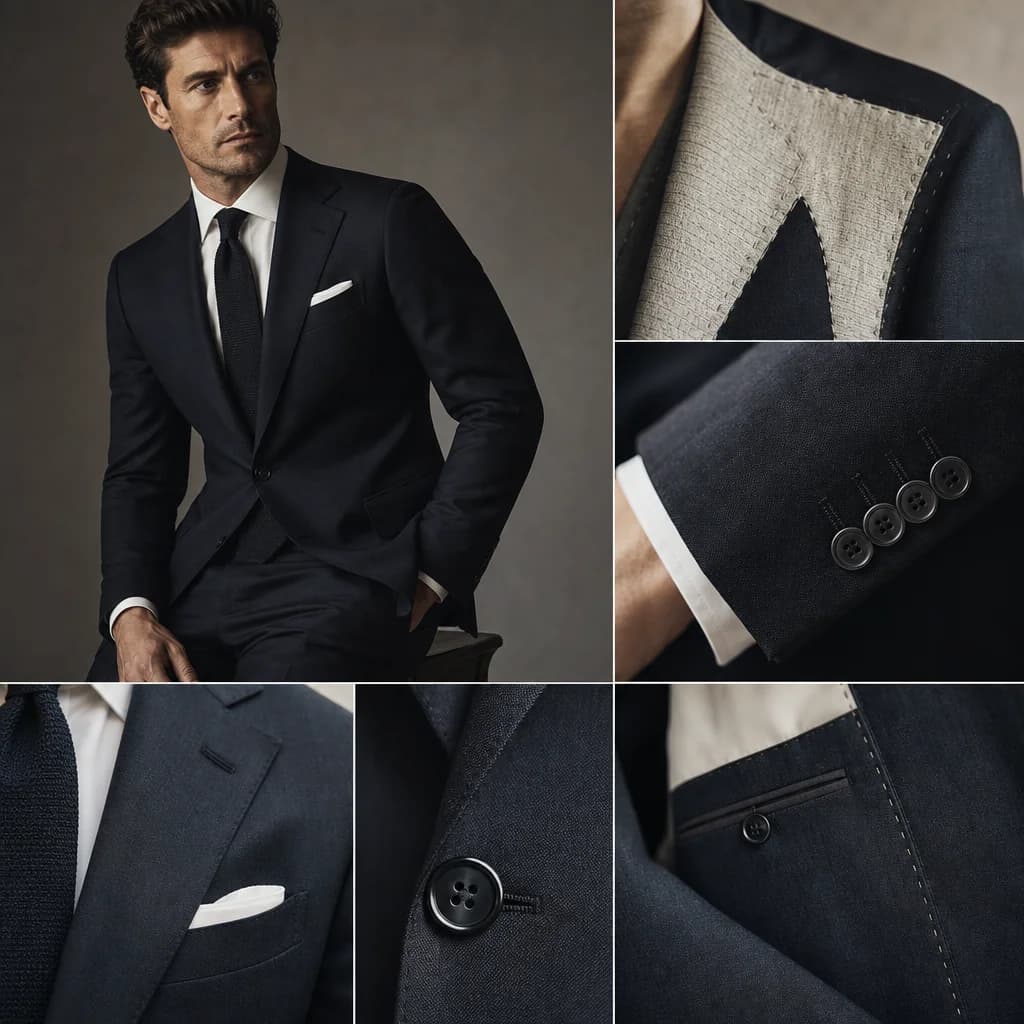
A man in a perfectly cut charcoal suit — full canvas construction visible in the drape
A great suit is never simply about fit. It is about the sum of decisions — fabric weight, construction method, lapel shape, button stance — that accumulate into something far greater than cloth and thread. To wear a suit that is truly made for you is to understand, at least in part, how it came to be.
Every suit begins with a decision about cloth. The weight, measured in grams per metre (gsm) or ounces per yard, dictates everything that follows. A 260–280gsm hopsack or fresco breathes freely and is suited to year-round wear in temperate climates. A 320–380gsm flannel or tweed drapes with a heavy, authoritative fall better suited to the colder months.
Beyond weight, consider the weave. Plain weave is taut and holds a crease; twill is supple and drapes beautifully; herringbone adds visual texture without crossing into pattern territory. For a first suit, a mid-weight, mid-blue or charcoal wool in a plain or twill weave is the wisest entry point — it will carry you through more occasions than any other option.
Perhaps no topic in tailoring inspires more debate than construction — specifically, the question of canvassing. There are three methods in widespread use:
"A suit is a uniform only in the sense that it communicates membership of a certain civilisation. What it does beyond that is entirely your own affair."
Silhouette is perhaps the most personal dimension of a suit — the place where a man communicates something about himself without speaking. The British tradition favours a suppressed waist, roped shoulder, and longer jacket: structured, architectural, authoritative. The Italian tradition is softer: the shoulder is natural or slightly extended, the chest less sculpted, the lapel often wider. The American tradition — undergoing something of a revival — is relaxed, boxy in the shoulder, generous through the body.
Neither tradition is correct. The question is which silhouette aligns with who you are and how you carry yourself.
Lapel width should roughly correspond to the width of your tie and, to a lesser degree, your shoulder breadth. The lapel notch or gorge — the angle at which the lapel and collar meet — is one of the most distinctive design details in a suit. A high gorge creates a longer, more elegant V and is associated with Italian tailoring; a lower gorge is more British and traditional.
The button stance — the height at which the top button sits — affects the visual length of the torso. A higher stance shortens the perceived torso and is generally more flattering on taller men; a lower stance elongates it. Most off-the-peg suits err toward the middle, which is rarely wrong and rarely remarkable.
A suit that does not fit is not a suit — it is cloth in search of a purpose. The non-negotiable points are these:
Everything else can be altered. A skilled tailor can take in a waist, shorten a sleeve, suppress a seat. The shoulder cannot be altered without rebuilding the jacket. Buy for the shoulder; alter for everything else.
A great suit, understood in full, is not a luxury. It is a long-term investment in the version of yourself you choose to present to the world. Invest accordingly, and it will repay you for decades.
Topics
About the Author
Style Director
Michael is the co-founder of Sartorial and its Style Director. With over a decade spent studying classic menswear from the ateliers of London to the tailors of Naples, he writes about the enduring principles that underpin a truly refined wardrobe.
Continue Reading
Style
A refined guide to choosing hats that answer rain, wind, sun, and occasion with ease.